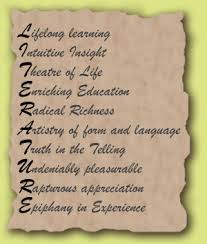
 An intelligible understanding of literature is imperative in other for a critical examination of “literary appreciation” to be conducted. Ighile (2011) purports that literature is a “branch of knowledge [which] springs from our love of telling a story, of arranging words in innovative patterns, and of expressing in words some delicate aspects of our human experience”. Furthermore, he contends that the different genres of literature (short story, novel, poetry, drama) are products of our imaginations which are aimed at “giving pleasure, provoking fantasy and also drawing the reader to the substance of reality”. From the aforementioned it can be deduced that the actual written word is not the overriding entity in the definition of literature. Consequently, one can safely say that the individual and his experiences take precedence in understanding what literature truly means. This very same sentiment is echoed in Donelson’s and Nielsen’s (2009) perception of literary appreciation. Their notion of the term is “the ability to gain pleasure and understanding for literature” but more so it is “to esteem, honour respect and /or admire the beauty and complexity of literature”.
 The ultimate goal of the literature teacher to is see and help students grow into literature. Likewise, the optimum goal of the student is to experience growth, to be able to move from stage to another in literature. However, we must all admit that this growth is not automatic. Students have to be taken through the trance of Adolescents’ literary interpretation and appreciation. Moore et al (1999) recapitulate this point quite avidly by asserting “Adolescents deserve instruction that will build both the ability and desire to read from increasingly complex texts.”

No comments:
Post a Comment